My son’s little dog has broken her leg. She goes to “doggy day-care” a couple times a week and she jumped awkwardly from the back of the van. It was a bad break at the bottom of her back leg and the vet put a caste on (its pink!) that covers the whole leg. As a Maltese terrier mix, she loves to run and is surprisingly fast for such a little dog.
As soon as the swelling went down she was getting around their flat as normal with the caste thump, thumping on the floor as she went. What surprised my son and his wife was that when they took her for a walk, she wanted to run. She just lifted up the leg with the caste on it and took off at her normal pace, running on 3 legs.
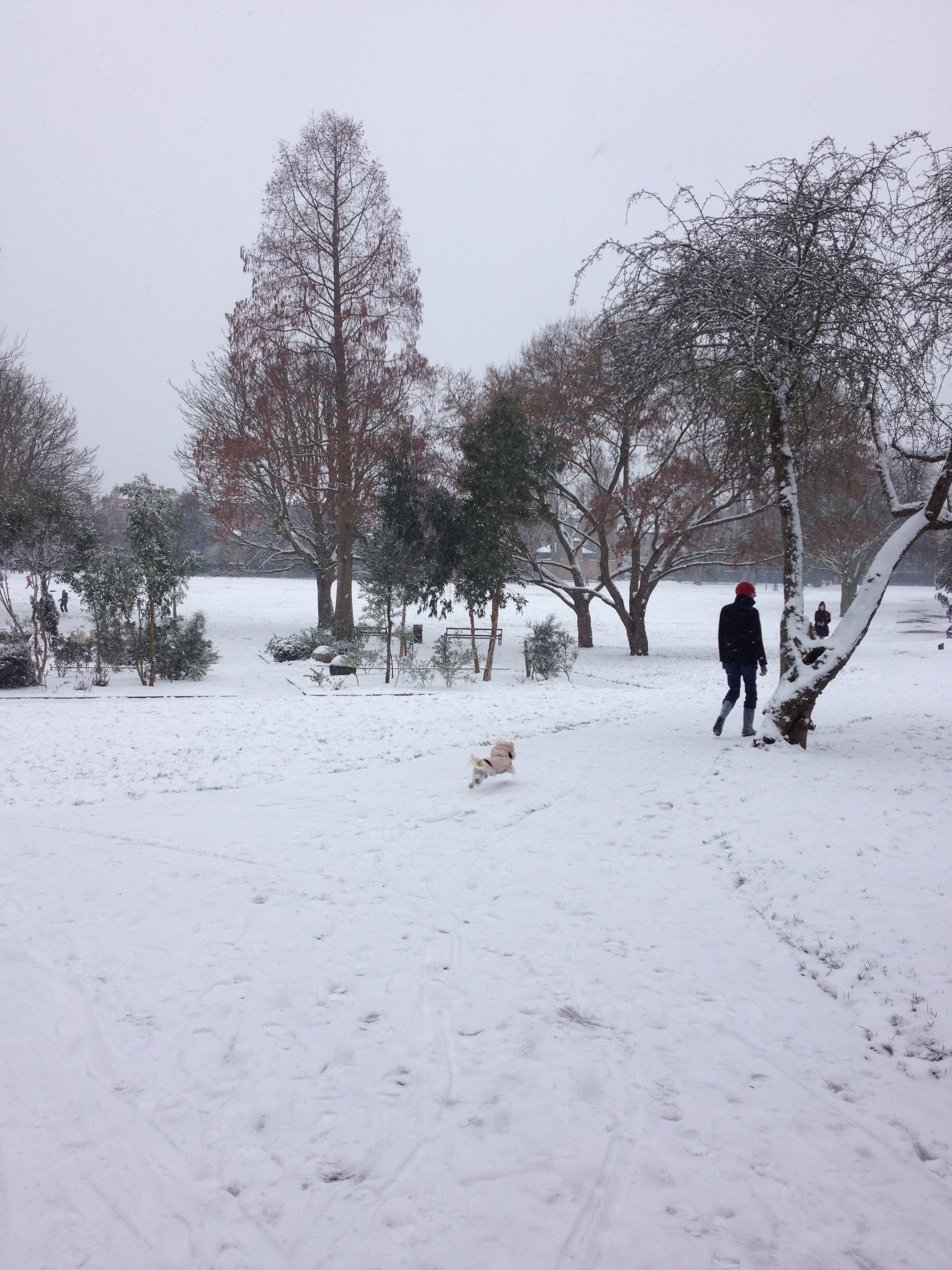 My daughter-in-law was amazed that their little dog just seemed to be getting on as if everything was normal and the caste was just a part of her.
The thought that popped immediately into my head was “yes that’s because she doesn’t attach any meaning to it.” When I said it, my husband (a doctor) commented that it was the same for little children. They automatically modify their movement to accommodate the caste and get around as if it was not an impediment or problem.
It’s interesting isn’t it how the meaning we make of a situation can impact on our lives? How often do we automatically attach a meaning to an event or situation without realising that’s what we have done, let alone challenging if that is the only meaning or if it is a useful one? That then becomes our perception or the lens through which we look at what’s happening. With their little dog, they had attached more than one meaning to it. It was “terrible for her”, and “a worry, a difficulty”. But this little dog, the one with the broken leg, attached no meaning to it. Once the pain had gone, she just got on with “it” in her life.
Now, I’m not suggesting that we should defer to the way dog’s live for higher wisdom and guidance but I have found that there is always some learning we can take from animals and the natural world.
It reminded me of a recent conversation. I was talking to someone who is planning to move to another country. They were lamenting the difficulties, time and how “painful” it was to apply for and get the necessary visas etc from that country. When faced with dealing with something we tend to give it a “label” and that label reflects the meaning we attach to that situation.
I was struck then by how the meaning we make of the events in our lives can create or make worse an environment of stress. Yes, visa applications do present specific challenges; they take time and effort and may force people to reassess their plans. But, it is up to us whether we decide to “label” it as a difficult and stressful situation or whether we choose to attach a different meaning.
The trick is to check, “What meaning am I going to make of it?” and “Does this allow me to accept it for what it is and help me move forward?” For example, you could choose to label it as the start of an incredible adventure. They got it straight away.
It seems that the meaning we make of events and circumstances in our lives actually has the greatest impact on our experiences. We actually do have a choice. We can choose to see that “It is what it is”. It is just an event until we attach our meaning to it. This is called the “is-ness” of life.
I am reminded of a quote that I use when I am teaching people about working with stress.
“It is not the potential stressor itself but how you perceive it and then how you handle it that will determine whether or not it will lead to stress” – Dr Martin Seligman
So, stuff happens. This triggers our thinking and emotional patterns and habits and they drive the meaning we make of it. We are on “autopilot” and unaware that it is a matter of choice. We can choose a different meaning.
Perhaps it is not so much a matter of not attaching a meaning. It is more a matter of deciding what meaning because that will determine how you feel, what you do and where your life takes you.
 Judy Baker