Are you willing to make mistakes?

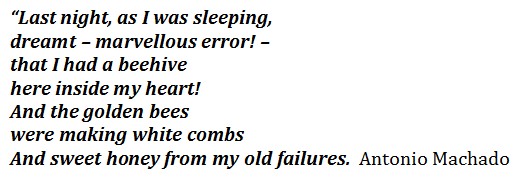
Poem


More accurately – Are you willing to make what appear to be mistakes, so that you can make corrections and learn?

This is the third in a series of posts that I have written about our wired-in tendencies to avoid feeling discomfort or stress. In my last post, “Do you take notice of coincidences?” I finished with an important quote from Albert Einstein “In the middle of difficulty lies opportunity”. I invited people to take the first step in discovering the hidden opportunity that lies in our stress, discomfort or difficulty. The first step was to start noticing what you do when you see difficulty or feel uncomfortable. I promised to follow up with another post.

I had people say to me that, as soon as they finished reading the second blog they wanted to read my next. I deliberately waited because, often, when we start noticing the hard-wired habits we have, it is enough. It can be both challenging and enlightening, and the learning and what needs to be done comes naturally or, with a little thought, is clear. So the heavy lifting can be in the first step.

However, the cursed “how” and “but” can get in the way and feed the avoidance habit. How can I feel better? How do I deal with this? But I have always run from difficulty. But it isn’t my fault so why should I be the one to do anything? Or whatever version fits the situation.

When I started thinking about what I should write, it became a bit like – how far down the rabbit hole do you want to go? It is a subject that links into so many areas, I could almost write a book. But that is not my purpose here. So I thought I would just offer some ideas for you to play with.

There are four steps that I would like to share with you. They stand up well against the examples I gave in my previous blog. They help deal with these hard-wired habits and the consequences that go with them. And you could find the hidden opportunity that lies in the middle of your difficulty, through any of these steps. They are clarity, courage, connection and correction.

Clarity

When we are in a reactive state, acting out or out of our hard-wired tendencies, wisdom has been taken out of the equation. You need wisdom to act skilfully. It is an internal state accessed when you move from a reactive, unconscious state of mind to one of conscious awareness. Wisdom needs clarity.

So difficult situations, difficult emotions always need clarity. What I’m talking about here is perspective and understanding. Do you understand what is really happening around you and in you? And, if other people are involved, do you understand their perspective as well? Clarity emerges as you begin understanding your needs and fears and theirs, responsibility and acceptance and much, much more than I can cover here.

Getting real perspective and understanding can be challenging because it can be hidden from us, we are not aware of them. It is hard to see what you can’t see. This is when we need someone to help.

If we are to find clarity and the opportunity in our difficulties we all need someone in our lives who speaks their truth without judgement. Someone who doesn’t just agree with us or rush to make us feel better. Yet at the same time, can measure when we need care and time to lick our wounds, and when we need to move – to wake up and grow up. It is called a growth relationship.

Courage

When we get really clear, we often find that what lies beneath these avoidance habits is fear. To take the next step we need to have courage. Courage should not be confused with “being brave”. Being brave often allows us to bypass clarity and avoid facing our fear and so bury it deeper where it can become even stronger.

Courage has a different hue. It is about working with your fear and moving forward skilfully. It is about understanding and taking responsibility for yourself and your actions.

Psychotherapist and author, Stephanie Dowrick, wrote about courage in her book “Forgiveness and Other Acts of Love”. She sums it up very well, “We long for a trouble-free Eden, for ourselves and even more for our children. But they will learn courage after they leave Eden, not before, and they will learn it through their engagement with living, not through avoidance”.

Connection

This is a crucial seal on beachcomponent in moving forward skilfully. Connection is a primary and core need of every human being. Where a connection exists, there is a relationship. Yet we pay little conscious attention to actively connecting with other people or the world around us, let alone with ourselves.

It is probably best explained using examples. First of all let’s look at keeping an honest, caring connection with ourselves. In the case of ‘pushing into the discomfort of exercise’, which I wrote about in my first blog, this type of connection means we can trust ourselves to go that bit further and get the advantage of the exercise without pulling back or going too far. In the case of ‘avoiding the discomfort of taking ownership of our responsibility’, connecting with that part of ourselves that sees but does not judge, allows us to move beyond the discomfort, to act with courage and to heal.

If we look at situations that include other people, such as avoiding difficult discussions, there are two ways to create connection. One is externally, with honesty and care, finding a way that a connection can be established before we have the discussion. The other is internal, subtler and requires more skill. Briefly, it involves engaging your heart and mind in an energetic connection with the other person, beyond your and their ego-based defences. It may seem a bit odd, but it never ceases to amaze me how powerful this can be.

Correction

When we stop avoiding and start taking action, even if we act skilfully, we are exposed to a level of uncertainty, especially when other people are involved. It is why clarity, courage and connection are such important steps. And, in order to make corrections, they may need to be revisited.


Are you willing to make corrections as you go along (make mistakes and then correct)?

If you are, then the rewards (especially emotionally and mentally) can be really significant.

If you tell me you understand, I feel a little pessimistic. If you tell me you do not understand, I feel a little more optimistic” Thich Nhat Hanh

Every time I have to make corrections, I actually understand a little more.

Let me know how you go!

Do you take notice of coincidences?

“In the middle of difficulty lies opportunity” Albert Einstein

Do you take notice of coincidences when they appear in your life? I tend to because I have found there is always something of benefit waiting (wanting?) to be found.

My last blog was called “What do you do when you are uncomfortable?” It was about how, in some areas of our lives, we tend to avoid feeling discomfort or stress whether it is in exercise, situations or relationships. It pointed to the benefit of facing, pushing into and learning from the discomfort, stress or pain before choosing what action to take.

Within a few weeks of writing that blog, I experienced two completely different events that brought this tendency we have to avoid or minimise back into the forefront of my mind.

First, I observed a dramatic example of someone avoiding difficult emotions, both their own and other’s. It was uncomfortable for everyone and a situation that needed to be worked through but this person literally ran away.

Then, I received a blog written by Dr Ginny Whitelaw, a leadership expert and Zen Master, called “Taking Ownership: How we avoid it and How Zen tackles avoidance”. She was writing from a different perspective, focusing on leadership and global issues, and giving examples of how managers and leaders avoid situations that are or might be uncomfortable. But it was the same theme and the truth is, in our personal lives we are all offered opportunities to show leadership simply by the choices we make when faced with stressful situations, relationships, or even as we exercise. She wrote, “The problem with avoidance is that the problem doesn’t go away. Indeed, these wired-in tendencies to make easy choices have consequences –“

Were these 2 events coincidences that were worth taking notice of? I thought about what meaning I wanted to make of them. Was there more for me to learn about how I avoided discomfort or stress, or was it about expanding my writing and teaching around this? Both, I decided. I have found that learning and teaching are on the same trajectory – one is always informing the other.

The point is we all have “these wired-in tendencies”. In some way, big or small, in some aspect of our lives we make choices that try to minimise or avoid our discomfort or stress. It is a defence mechanism, designed to protect us from discomfort or pain, triggered when we perceive difficulty, stress or danger.2 birds

The more I thought about it, the more I began to recognise these hard-wired habits, in myself and in others. These are just a few examples that I noticed: putting off what could be a difficult discussion; automatically denying and pushing down any anger or upset when asked if you are okay; hitting out with hurtful statements; avoiding the discomfort of taking ownership of one’s own part in a situation by blaming others or talking endlessly about our “rightness”; putting off exercising or improving a diet; engaging in “retail therapy”; putting off changing that job or finding a new one; and taking the easy choices instead of doing the more difficult things to reduce energy usage, carbon emissions or waste.

Two things became clear. Firstly, these tendencies do have consequences, either directly or indirectly, on all of our relationships. They impact on our relationship with ourselves, with other people and with the world around us. They can lead to misunderstandings and disconnection. Secondly, awareness is the first step. Sometimes we know we are making these choices but cannot help ourselves or aren’t aware that there will be consequences. More often, we do not stop to see that we even had a choice.

Albert Einstein believed that “In the middle of difficulty lies opportunity”. Without naming and facing these tendencies, we can’t begin to see the hidden opportunity that lies in our stress, discomfort or difficulty. That is what I will write about next. For now, see this as an invitation to take the first step. Just begin by noticing what you do when you see difficulty or when you start to feel uncomfortable.


What do you do when you feel uncomfortable?

“The difference between what we do and what we are capable of doing would suffice to solve most of the world’s problem.” Mahatma Ghandi

When I was at a Pilates class recently, the physiotherapist told me to keep going until the muscles I was working on fatigued. Over the years I have trained with fitness trainers and I was familiar with the “no pain no gain” approach, so I pushed until the muscles stung and quivered. There is always this light-hearted banter in our group about what a hard taskmaster she is. To be fair, she explained that it was at that point of fatigue or “stress” that the most benefit was gained. The quote from Ghandi came to my mind and triggered some thinking about our general tendency to avoid discomfort and stress.

I was discussing this with a fitness trainer and he commented that, the reluctance to push until fatigued was the reason many people do not make the fitness progress they are capable of (or want). For example, walking regularly is good exercise but if you do not set a pace that leaves you somewhat short of breath, you are unlikely to improve your cardio-vascular fitness. Do we need trainers to get us to that point of fatigue and discomfort because many of us are unlikely to get there on our own?

IMG_0750

This is about the connection between our physical body and our thinking and emotions. The discomfort we feel as we approach a state of fatigue is feedback that we are taking this particular part of our bodies beyond what is comfortable. Generally speaking, if we don’t like it or if we don’t have a compelling reason to keep going, we stop. It is our thinking and emotions, not our body, that stop us from pushing into the point of discomfort that is needed for real progress or improvement.

Just to be clear here, I am not talking about exercising to the point of injury. There are some of us who can push too far and too hard. I am referring to the tendency to protect ourselves from discomfort or stress, by stopping or easing back, before the benefit has been gained.

There are powerful lessons here for other areas of our lives.

 We seem to have developed this belief that things should not be uncomfortable. Stress or discomfort is seen as “bad” while being comfortable as “good”. When an event or relationship triggers stress or discomfort (sometimes just feeling terrible/bad/wrong or able to name emotions such as angry, sad, frustrated, indignant), we automatically act to shift or relieve that feeling. It is about bringing ourselves back into our comfort zone but it may not be consciously choosing to do that. We use all sorts of techniques and habits such as distraction or dulling our minds, ringing someone who will agree with us, or acting out our anger or self-pity. Of course, just like exercising within your comfort zone, nothing really improves. The feeling may shift but sooner or later, it comes back.

So what does this mean? Well, for one thing, stress and discomfort are feedback. They are neither good nor bad – that is just the meaning you put on the experience. The feedback is – “you are out of your comfort zone” and probably at a point where there is a benefit, an opportunity for learning or growth. So, when you feel stress or discomfort, whether it is from a situation, a relationship or when exercising, try facing it and looking for the opportunity. Seek to understand what it is about (there is often something we can’t see in the moment), if necessary seek advice and clarity, not just comfort, and then choose what you are going to do.

Finally, to return to my original thought, we are always capable of going further than we thought we could. Without realising it, we have placed our own limitations on what we think we are capable of. So for everyone, in some area of your life – you know the one; there is always more, more of you, more in you and more for you.

The Meeting

The other afternoon, I met with a group of like-minded women. We meet because we are interested in personal learning and growth, using the Enneagram as our common base. Each time, a topic is offered for discussion by one of the group. On this day, the topic was self-inquiry and the role of the Enneagram. As our group is made up of both enthusiastic students and accredited teachers, you might think that the conclusion would be both obvious and simple. After all, the Enneagram is a master tool for understanding one’s self, offering a powerful and well researched map of 9 personality types that can accommodate the uniqueness of the individual and the impact of a particular situation. [Note: for those who are unfamiliar with this valuable tool and would like to know more, go to Enneagram World Wide.]

Despite this, what unfolded was a much broader discussion, looking at the nature of self-inquiry and touching on its value. For me, these are important issues for anyone wanting to grow beyond the misunderstandings we experience in our relationships, the discomfort and unhappiness that can get triggered in our day-to-day life, the stress that can accumulate or the limitations of and doubts about our capacities and value.

I thought I’d share with you a brief overview of our discussion and expand on some aspects a little further.

What is meant by self-inquiry? This is not a New Age concept. The idea has been understood and practised in both the Western and Eastern traditions for centuries. The quote “Know thy self” is from Socrates and it has been a practice of the Vedantic tradition (originating in India) for even longer. For our discussion, we were talking about the willingness to go inside to examine our inner experiences so as to better understand and know ourselves. This is not always easy. ReflectionsIt takes courage to be willing to look at ourselves, as we truly are, warts and all as they say. It is a process of reflection, bringing the quality of curiosity, suspending judgement and simply accepting what you see. After all, we are all in the same boat – for each of us; our life has brought us to this point, to where we are and how we are.

What is the purpose of self-inquiry? There was recognition among the group that the reason for self-inquiry was to enable personal growth but I think there is something more that comes first. Self-inquiry allows us to see things more clearly, to see not only how we are creating our lives but also much more than that. It allows us to Wake Up.

What is the nature of self-inquiry? Put simply, there are different levels or layers of self-inquiry and there are some very good tools and practices to support the process. What I am talking about is not limiting yourself to investigating your thinking and emotions, which is where most tend to focus. Rather, see yourself as a whole, inquiring at a physical, thinking, emotional, life purpose (why am I here) and, ultimately, spiritual (who am I truly) level.

Let me briefly explain what I mean. Inquiring at a physical level (from our bodies) helps us to understand ourselves better and provides information we can use to guide us. It is the conduit for all self-inquiry. It could simply be, checking in how does the body feel right now? What does it need? Oh, I am feeling tired and I need to make sure I stop and rest so that I can sustain what I have to do. Or going deeper, there may be a recognition that this tiredness is a way of distracting myself, and so on….. but, as they say on TV, there is more, there is much more that is available from our bodies and from working with our bodies. Two particular areas need mention here – emotions and inquiring into the deepest level of the heart.

The body is tightly connected to our thinking and our emotions, to the extent that they actually operate as one entity. Emotions are presented physically and everyone experiences the full range of emotions in different parts of their body and in their own way. When you understand your presentation of particular emotional reactions, you have some very valuable information to work with. As a simple example, someone may experience anger as a tight clenching in the gut and it can become an early warning system. Ok, I can feel anger coming up and I don’t want to loose it right now. Take a deep breath and wait a second.

Inquiring into our thinking and emotional patterns, and the tendencies and habits that result, is fundamental to freeing ourselves from limiting behaviour. It also offers us the possibility of observing these patterns and tendencies, which releases us from being caught up in them and being defined by them. They are not who we truly are. This is a key teaching of Helen Palmer. Both Shadow Work and the Enneagram are powerful tools for inquiring into emotional and thinking patterns, which is why I include them in my workshops.

Inquiring into the fundamental questions of our existence, who am I and why am I here, helps us to unfold our full potential and purpose and, most significantly, to know our true self. There are processes and long established practices that support inquiry at this level and these are also taught in my workshops.

Someone in our group raised the question “Can there be too much self-inquiry, too much growth?” For me, the answer is both yes and no. No, because both self-inquiry and growth are not destinations, rather they create a journey in which there is always more; more of you, in you and for you than you could ever imagine. However, yes is also true, because there are physiological, neurological and psychological reasons for us to have periods of consolidation, of just living and being. As you go along, if you are listening to yourself, the whole of yourself, you will sense, feel, recognise or know when those times have arrived.

I’ll finish with a quote from Lord Chesterfield, a wise father, in a letter to his son, June 6, 1751. “Study the heart and the mind of man, and begin with your own. Meditation and reflection must lay the foundation of that knowledge, but experience and practice must, and alone can, complete it.” (the bold is my own emphasis)


Emotions that get triggered

Yesterday, I came up against the passion and the idealism, the anger at injustices done in the world and the frustration of complacency, and the disappointment of someone I love and cherish. It was not the first time and yet I found myself no better equipped to respond adequately than in the past. When emotions are fired up in a loved one and you get in the firing line, it often triggers your own emotional pathways as well, even when you know in your heart that the anger is not about you, not really.

So here we were, from a news item on the TV, followed by some comments, to this. My first reaction was to placate, only to meet judgement and criticism, which in turn triggered my defence and denial. As usual, this did not help the situation either.

Within the next microsecond, I was heading along one of two well-developed emotional pathways. We tend to be vulnerable to the ones we love. So, before I knew it, I let it get to me and allowed the implication that I was ignorant, ill informed, complacent and a disappointment, to take its hold.

Now this story is not about who was right or wrong – as if there is an answer to that. This story is about how very quickly our well-developed neural pathways (emotional and thinking habits) are triggered. You don’t immediately recognise the unfolding of your emotions and thinking – not while you are still in the situation. Within a hundredth of a second a reaction is triggered – faster than the analysing, logical part of our brain can respond. By that time, the whole of our body has reacted and we are in fight/flight with our emotions having the upper hand. So, as I withdrew, my own ‘stuff’ came up and I was already having thoughts about not being able to respond effectively, not being intelligent enough, about my thoughts and opinions not counting. {Now I want to make a point here. None of this was true! It was just thoughts, and it was just old stuff}.

I did what many people do, I started to make my own meaning of the whole event and, of course, it had absolutely nothing to do with the original discussion, the state of the world, corruption or Australia. With my emotions and thinking unchecked the meaning I was making of it was fairly negative.

It was not long before practice and training took over and little logical thoughts emerged. “Wait! Wait a minute!” clanged in my head. There is usually a window of opportunity where we have a choice whether to allow our emotional and thinking habits to run the show or not. This was mine.

I realised that the most important thing in all of this, the priority, was not what was said or felt or who was at fault. The most important thing, the base from which all interactions grow, was not our relationship but my relationship with myself, and it was the same for them. What was I doing to myself? What was I saying to myself? Where was the part of me that is able to hold my centre? Was I showing myself understanding, compassion, support and trust? Were my words and actions both inside and outside of myself in alignment with my purpose and values? {Referencing this sort of event through your purpose is a very useful tool.}

I had not taken the learning from earlier experiences. In my rush to connect and make things better, I had not centred myself. I had forgotten about the parts of me that could be so easily triggered and hurt and they had taken over on their own and run their story.

So, I invited myself within and cared for and guided myself in the same way I often do for others. For if I cannot do it for myself; if I cannot invite forward and connect with all the parts of myself, the parts that are fearful, the angry parts, even those that frustrate or disappoint me; if I cannot hold myself with love and compassion and create harmony within myself, then how can I possibly hope to respond effectively? If I do not take that window of opportunity and weaken that neural pathway, then how can I hope that others could do the same?

I was reminded of the saying that I have seen attributed variously to Hermetic and Vedic texts, “As within, so without”.

Are decisions or choices causing you stress?

A friend was stressing about which car to buy. A client was worrying about her son who was trying to decide what he should do with his life. As well as worrying about her son, she was also stressing about what decision he should make. Another was experiencing a lot of stress trying to choose when was the right time to retire. These are just a few examples. None of these situations are uncommon but they all have two things ‘in common’ – they all involve a level of stress and each involves a decision or choice. One of the most important aspects of finding your way through stressful times is being able to make decisions and choices that are right for you while creating as little stress as possible in the process.

People tend to use the terms decision and choice interchangeably and this means that the same amount of time and energy can be spent on decisions or choices that are not equivalent in importance. It is useful to differentiate between deciding and choosing for a number of reasons.

Firstly, this helps to create some sort of hierarchy of importance with respect to the amount of time and energy, and therefore stress, you allocate. When there appears to be a fork in the road and it feels like this is an important decision to be made, but you feel really stressed trying to make it, then chances are, there is a more important, higher level decision that you must make first. So, for the friend who was stressing about the choice of a car, there were bigger, more important decisions she needed to address first and this helped her see it was, after all, just a choice.

Secondly, it makes life easier if there are guiding principles for making the choices that life throws our way. One way of looking at this is to allocate decisions as involving the bigger, more important and profound aspects of life and see them as the foundation on which choices are made. Let me give you some examples. A fundamental decision that guides all the choices you make is the answer to this question “What is most important to you?” Or, to put it another way, “What do you value most in life?” Because this is at the high end of decision-making, these are not questions you can take lightly – yet many of us do, if we bother to consider them at all. There is a process for getting really clear on what you value in life and it takes time and needs to engage different types of thinking. But it also helps to identify how, and often why, you are creating your stress and suffering. It usually takes some guidance to follow the process and understand how to put the decisions to practical use. However, ultimately, it leads you to truly understand what gives your life meaning, in a way that is not just you making up your mind but the whole of you – body,mind and soul – is clear and engaged. This was the decision that both my client and her son needed to make first. Another important decision for her, was “What sort of relationships do you want in your life?” This is relevant because that decision impacts on any choices she made in trying to help her son – or really more accurately – supporting her son.

When I made the choice to study for my MBA, I did it without understanding or working on the more important decisions in my life so I used the rational thinking part of my brain and analysed the decision and the implications, finally making the choice. But, then, three quarters of the way through, I began to realise that what I thought I wanted to do with it wasn’t right for me. It became really hard work and only determination got it finished – only to feel in the end like it just didn’t feel as good as I thought it would! There is a quote from Albert Einstein that I discovered later on and it gives an important tip about making high end decisions.

“The intuitive mind is a sacred gift and the rational mind is a faithful servant. We have created a society that honours the servant and has forgotten the gift.”

So the third reason for differentiating between decisions and choices, is for more effective goal setting. You do the process and decide what you truly value in life (not what you think  is important or what you should value) and then you choose your goals, based on those decisions. I rarely find people do it this way round. If not, like me, people often say that finally achieving a goal that they have worked towards somehow lacks meaning and they can even feel dissatisfied, or they loose the motivation or drive to keep going and it becomes really hard work or is never achieved. This is because the goal is either not aligned with what is important to them or, at some level, does not give meaning to their life – they only thought it would. The thing is, of course, you might still make a choice that ends up not feeling right for you, but it’s just a choice, and with your decisions and your understanding of yourself firmly in place, you can recognise it early and you have a guide on how to shift your direction.

The final reason, is that by creating in your own mind an understanding that life decisions are the high-end, guiding principles on which life’s choices can be made helps to easily sort out the more important choices from the less important. Barry Schwarz wrote a book called “The Paradox of Choice”, in which he brings together current research in the social sciences and shows how too much choice has been detrimental to our psychological and emotional well-being. He makes a counter-intuitive argument that eliminating or limiting choices can greatly reduce the stress, anxiety and busyness of life. Knowing when to put time and energy into choosing is a valuable thing. This means, from the decisions you have made, you understand which choices matter, and therefore need reference to those guiding principles, as well as some time and energy. You also understand which choices matter less and therefore are allocated to “does it really matter, do I need to stress, will either way be okay in the the end?”

So what about the man who was stressing about when to retire? Well, his decision appeared to be not when he should retire but – if he wasn’t a farmer and creating wealth for his family then who was he? What use was he? Really, there is a more fundamental and profound decision that needed to be made first – “what gives purpose and meaning to his life?” That is the most important decision any of us can make about our lives. And it is never too late!

Relationships are the biggest cause of stress in people’s lives, and offer the best opportunities.

Featured

Do you crave more happiness and less stress in your home, workplace or your life?
Are there relationships that you long to improve, restore, enrich?
Are you at a loss to know how to reach or to help someone in your life?

Begin with the relationship you have with yourself.

 We all need to improve how we care for and take care of ourselves. To some extent, we all need to heal ourselves. Do you know how you can make a difference to your own life and have that difference ripple out to the people and the world around you?

 Learn how to transform and enrich all of your relationships and the whole of your life. Discover purpose and what gives your life meaning.

What do you tell yourself?

When people ask me what is it that I teach, my response is that I teach about relationships. When I say that some say “Oh, something like marriage counselling”.

My answer is “Mmm, well, yes, relationships between people are the context of most of our lives but what’s really interesting is that relationships actually exist on a much broader scale than that so I take an inside out approach so that you can see how outside in works as well”. That usually confuses everybody and I love it when they say “how do you do that?”

The Concise Oxford Dictionary defines relationship as “a kind of connection or feeling that prevails between persons and things”. So, what I am talking about when I refer to relationships is a connection or feeling that exists between people, between things and between people and things. I like the word “connection” because, despite the fact that our senses tell us that we are separate and we view ‘things’ as separate such as our mind and our body or our work and our home or the plant in my room and me, its not true – connection is fundamental to our existence, both as a reality and as a personal experience.

This means that nothing happens in isolation. Relationships exist on all levels and that is important to our lives, it is just that sometimes we don’t realise it until we make the connection! Scientific research helped me see this.

I will give you some examples for those of you who are interested in the science but for those who aren’t – skip to the next paragraph! At the level of quantum physics there is a phenomenon called quantum entanglement, which refers to the phenomenon where particles that appear to be separate in one sense really are not separate at all because when one particle is stimulated the other one has an identical reaction to the stimulation, even when they are long distances apart. Then there is the research into networks, which identified that the relationship between people’s happiness extended up to three degrees of separation. It concluded that people’s happiness is influenced by the happiness of others with whom they are connected. Astronomers discovered that we are made up of the same elements as everything else in the universe. We are made of stardust; we are connected to the universe. Psychoneuroimmunology is a multidisciplinary study of all aspects of the body and mind. It is the study of how the mind and the body communicate. Through a complex network, our thoughts and our emotions have a relationship to everything that happens in our body, as seen by the relationship between our emotions and our immune system.

So there is a relationship between our thoughts and feelings and our health and healing. The relationship between mental attitude and rate of recovery is well established in medicine.

When we talk about our thoughts, we are really referring to what we are telling ourselves. We tell ourselves lots of things but we mostly don’t even notice we are doing it and seldom pull ourselves up on it. What we tell ourselves and how we feel about ourselves determines what we do, how we act or react, what we say. It is the basis of habits.

In the absence of awareness, we use established thinking and emotional patterns and so most of our actions and behaviour are habits. That’s important for us and it is important for the relationships we have with other people. Years ago, I had a client in my dietetic practice who was trying to lose weight. If she had worked really hard during the day or if she had a bad day she felt like she wanted to nurture herself so she would give herself something “nice” and sweet to eat. It had been a totally unconscious pattern but as she started to realise how her relationship with herself, her body and her food created her behaviour, that new awareness was a real turning point.

Our relationship with ourselves is determined by our thinking and emotional patterns. There are other aspects to our inner experience that are also important including our spiritual intelligence and our access to joy and inner wisdom.

What does this mean for you? It means that your relationship with yourself determines your actions and behaviour and has an enormous impact on all the relationships you have with other people.

There is a wonderful story that Dan Millman tells when he teaches about how little things make a big difference. A woman came up to him and told him how she had always been very shy and had been suicidal, having had a couple of half hearted attempts. She had decided that she was going to do it, in her words “once and for all”. She said, “I didn’t believe anyone cared whether I lived or died, so I didn’t care, either. I was on the way home where I was going to do it, when I saw a man – a nice looking man, walking in the opposite direction. I don’t usually look at people, but in the state I was in, it didn’t matter, so I looked at him and he looked back and smiled at me. He had a wonderful smile – and then he was gone. I know it sounds crazy but his smiling at me – it was something I wanted to hold on to for a while, so I – I didn’t kill myself that day or the next. Then I decided to stick around and get some help. Things are better now. I have a boyfriend I love…….”

Little things, small actions, do make a difference but what struck me is that there is more than just a moral to that story. She had told herself that no one cared whether she lived or died – and she believed it! Byron Katie speaks about a realisation that came to her at a time of complete despair, “I realised that when I believed my stressful thoughts, I suffered, but that when I questioned them, I didn’t suffer, and that this is true for every human being.” We are capable of stressing ourselves. We are capable of telling ourselves things that are simply not true. We are also capable of turning that around and caring for ourselves.

And then there is that man who made a connection with her or put another way, he acknowledged his connection to her. It was brief and passing but the thing is how he acted was a reflection of how he felt about himself, what he was telling himself and his relationship with himself. In that moment, it turned out to be incredibly important.

But really, isn’t it always?

Opening the invitation to authentic relationships

I love books. My husband can spend hours in a hardware store and I can spend hours in a bookstore. Fortunately, my husband also likes bookstores but I don’t know, I just can’t reciprocate with the hardware stores.

Over the years, I have developed a very reliable technique for choosing books. I let them call to me. I just run my eye or sometimes my hand along a bookshelf and somehow a book will call to me. I then have a more rational process I go through (table of contents, trial read, author etc) to confirm that this is the one for me, right now, in this moment in my life. I know it sounds strange but it works every time!

I was visiting one of my favourite bookstores in Montville in the Sunshine coast hinterland when a little book called to me. It was called “Opening to The Invitation”. Some of you may be familiar with the poem “The Invitation” written by Oriah Mountain Dreamer – I have to admit my rational mind did think Really? But once I read this little poem I knew this book was the right one for me. It tells the story of how Oriah (Mountain Dreamer was given to her by the Native American shaman she studied with and was apprenticed to) came to write this prose poem. She is one of those people who, after two years of serious, chronic illness, were called to choose between a life that “was a good life, just not my life” and a life that connected her to herself and her dreams and nourished her health.

She wrote the poem “in a quiet moment late at night when tiredness stopped my head from censoring the words that flowed from my heart onto the page”. Oriah later included it in a little newsletter she edited and was surprised when it “went viral”. So much so, that people did not know who this Oriah Mountain Dreamer was (lots were inaccurate), some even changed some of the wording and she had to finally learn about letting go of control.

When you read her story, it is clear that different people have brought their own perspective to the poem but for me there is a call for authenticity in relationships in this prose poem. Those of you who study the Enneagram will be aware that some personality types have a more profound need for authenticity but everyone wants relationships that they can trust, that are reliable and genuine. Connection is the key. I am talking about a connection that both gives and receives something of each other.

She starts “The Invitation” with:
“It doesn’t interest me
what you do for a living.
I want to know what you ache for
and if you dare to dream of meeting your heart’s longing.”

Because our western world mostly sells the superficial and values things that are often not the most important, many long for and seek genuine connection – I know I do. Some people deeply desire trustworthy and reliable relationships but hold back because of doubt or fear of the opposite.

“I want to know if you can live with failure,
yours or mine,
and still stand on the edge of the lake
and shout to the silver of the full moon
‘Yes!’
It doesn’t interest me to know where you live
Or how much money you have…”

Some people find discussing the inner, more meaningful part of a person just too intense, too much or feel safer keeping to the superficial in their relationships. Some want genuine relationships but also place value on what you do and have a need for you to know what they do or have done. All that this tells us is that relationships offer us opportunities for growth. And in the end, there is no avoiding the importance of your relationship with yourself.

She finishes with:
“I want to know if you can be alone
with yourself
and if you truly like the company
you keep
in the empty moments.”

It seems to me that the desire for authenticity asks of me to care, to be true, to give and to be accepting in my relationships. It needs me to open my heart, my mind and my embodied knowing, not just my heart and ignore my mind and my instincts, not just my mind and ignore my heart but all three, open and working in concert. That is no always easy.

To read the full poem visit Oriah’s website at http://www.oriahmountaindreamer.com

What do life’s difficulties mean?

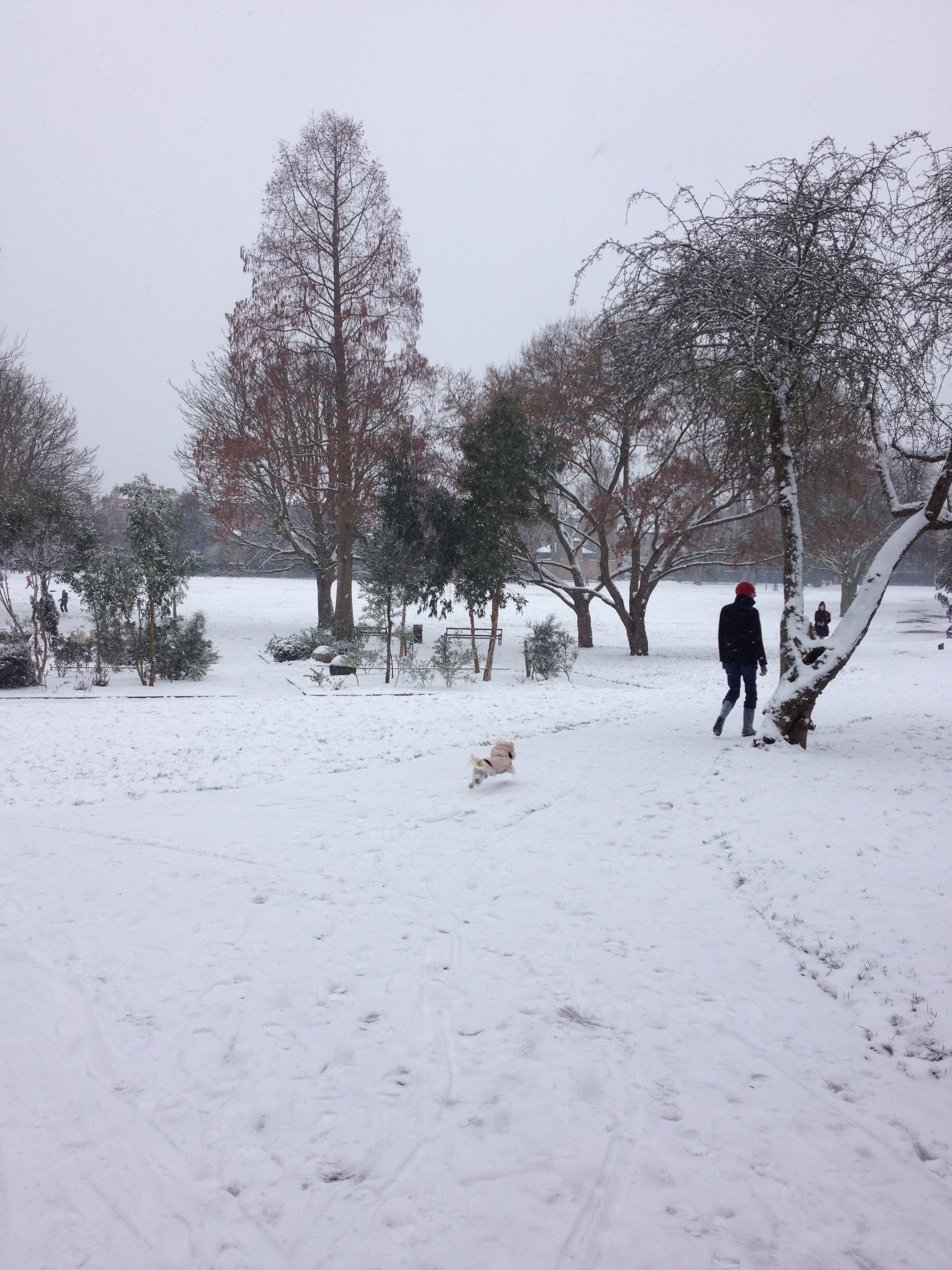
My son’s little dog has broken her leg. She goes to “doggy day-care” a couple times a week and she jumped awkwardly from the back of the van. It was a bad break at the bottom of her back leg and the vet put a caste on (its pink!) that covers the whole leg.  As a Maltese terrier mix, she loves to run and is surprisingly fast for such a little dog.

As soon as the swelling went down she was getting around their flat as normal with the caste thump, thumping on the floor as she went. What surprised my son and his wife was that when they took her for a walk, she wanted to run. She just lifted up the leg with the caste on it and took off at her normal pace, running on 3 legs.

David and WinnieMy daughter-in-law was amazed that their little dog just seemed to be getting on as if everything was normal and the caste was just a part of her.

The thought that popped immediately into my head was “yes that’s because she doesn’t attach any meaning to it.” When I said it, my husband (a doctor) commented that it was the same for little children. They automatically modify their movement to accommodate the caste and get around as if it was not an impediment or problem.

It’s interesting isn’t it how the meaning we make of a situation can impact on our lives? How often do we automatically attach a meaning to an event or situation without realising that’s what we have done, let alone challenging if that is the only meaning or if it is a useful one? That then becomes our perception or the lens through which we look at what’s happening. With their little dog, they had attached more than one meaning to it. It was “terrible for her”, and “a worry, a difficulty”. But this little dog, the one with the broken leg, attached no meaning to it. Once the pain had gone, she just got on with “it” in her life.

Now, I’m not suggesting that we should defer to the way dog’s live for higher wisdom and guidance but I have found that there is always some learning we can take from animals and the natural world.

It reminded me of a recent conversation.  I was talking to someone who is planning to move to another country. They were lamenting the difficulties, time and how “painful” it was to apply for and get the necessary visas etc from that country. When faced with dealing with something we tend to give it a “label” and that label reflects the meaning we attach to that situation.

I was struck then by how the meaning we make of the events in our lives can create or make worse an environment of stress. Yes, visa applications do present specific challenges; they take time and effort and may force people to reassess their plans.  But, it is up to us whether we decide to “label” it as a difficult and stressful situation or whether we choose to attach a different meaning.

The trick is to check, “What meaning am I going to make of it?” and “Does this allow me to accept it for what it is and help me move forward?” For example, you could choose to label it as the start of an incredible adventure. They got it straight away.

It seems that the meaning we make of events and circumstances in our lives actually has the greatest impact on our experiences. We actually do have a choice. We can choose to see that “It is what it is”. It is just an event until we attach our meaning to it. This is called the “is-ness” of life.

I am reminded of a quote that I use when I am teaching people about working with stress.

“It is not the potential stressor itself but how you perceive it and then how you handle it that will determine whether or not it will lead to stress” – Dr Martin Seligman

So, stuff happens. This triggers our thinking and emotional patterns and habits and they drive the meaning we make of it. We are on “autopilot” and unaware that it is a matter of choice.  We can choose a different meaning.

Perhaps it is not so much a matter of not attaching a meaning. It is more a matter of deciding what meaning because that will determine how you feel, what you do and where your life takes you.